The container standard for space.
One open hexagonal interface for containers, rovers, labs and habitats on any world. Configure a container, reserve your payload slot, choose your ride.
Every mission reinvents the same box.
Each lander carries a custom payload no one else can use. No shared interfaces, no reusable logistics layer, no standard. NASA does it one way, ESA another, every commercial lander another. An industry burning billions to solve again what we already cracked on Earth.
Space logistics has no equivalent. Yet.
One container. Three sizes. Book a slot.
HEX is an open hexagonal container standard with one opening and one sealed adapter. Structure, power and data pass through a single coupling. The same hexagon scales from a lab portable unit to a Starship class module, and the standard interface makes ridesharing plannable. Universities, institutes and startups book a slot and fly. Labs, habitats and data modules are the later outlook. Today we build the container.

- Vertex to vertex
- 2.0 m
- Height
- 2.0 m
- Internal volume
- 5.2 m³
- Payload reference
- Micro rover, research bays
Buildable in any university hall, transportable disassembled, sized for lunar lander cargo class. This is the unit that flies first.
Configure this container →Structure, power, data and fluids run through a single sealed adapter instead of six loose ports. 28 V and 120 V DC, two Gigabit Ethernet lines, CAN backup, CCSDS conform, fluids internal.
Every structure becomes obsolete one day. Spaceflight leaves wreckage behind. Our containers come back the same way they arrived.

Live the mission before it flies.
Analog missions simulate life and research on another world, right here on Earth, inside HEX container habitats. Join as crew, fly your experiment in a standardised bay, or build your thesis around a campaign. Every ground deployment builds heritage for the lunar surface.
Analog Astronaut
Live and operate in a HEX habitat with experiments, protocols and simulated EVAs. Open to anyone with the drive. A first real step toward the astronaut path.
Join a crew →Research Payload
Institutes and research teams put an experiment into a standardised HEX bay. Research with the crew in the loop, data support and joint publication.
Propose an experiment →Thesis and Student Projects
Build your Bachelor or Master thesis around a real campaign. Supervised together with your university, with hardware you can point at instead of just a PDF.
Propose a project →Artemis is flying. Commercial lunar payloads are real. Starship changes mass to orbit by an order of magnitude. Within a decade there will be permanent infrastructure on the lunar surface and none of it will talk to each other unless someone builds the interface layer first.
In five years the proprietary solutions lock in. This is the moment a standard can still be set. We are setting it.
Hexagons tessellate. Containers become labs, labs become habitats, habitats become the first permanent infrastructure beyond Earth. Sketched today, built step by step.
Giving consciousness a home in the universe.
LUMO · Ad Lunam
 EXISTStartup Grant
 ESA BICBaden Württemberg
 SSEAESA and TU München
 IAAPolitecnico di Torino
 SGACCommunity
Programs we present at, apply to or build toward. Shown as ecosystem context, not as endorsements.
On the record, in person.
Symposium stages, ESA training facilities, expo floors. This is where the standard is argued, tested and defended in person.
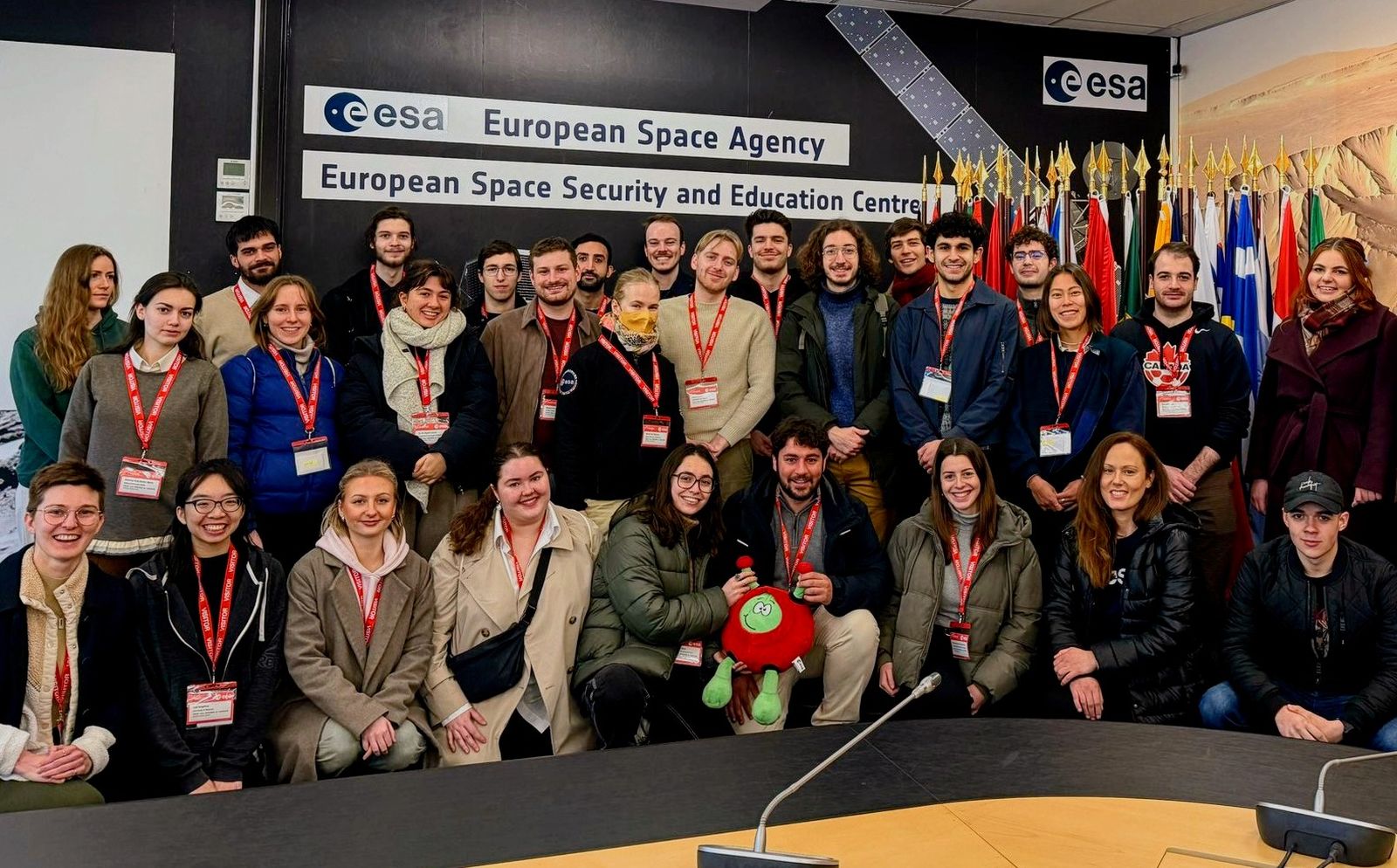
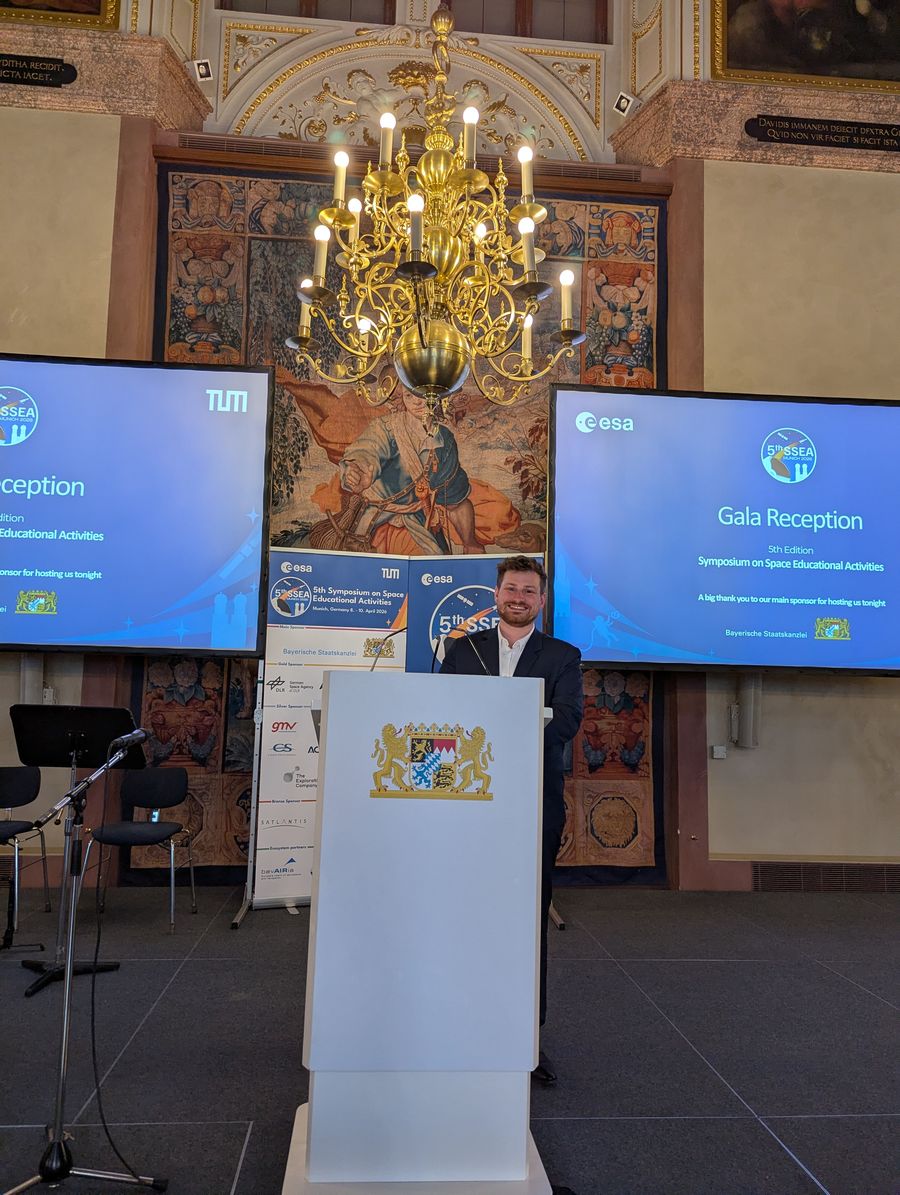
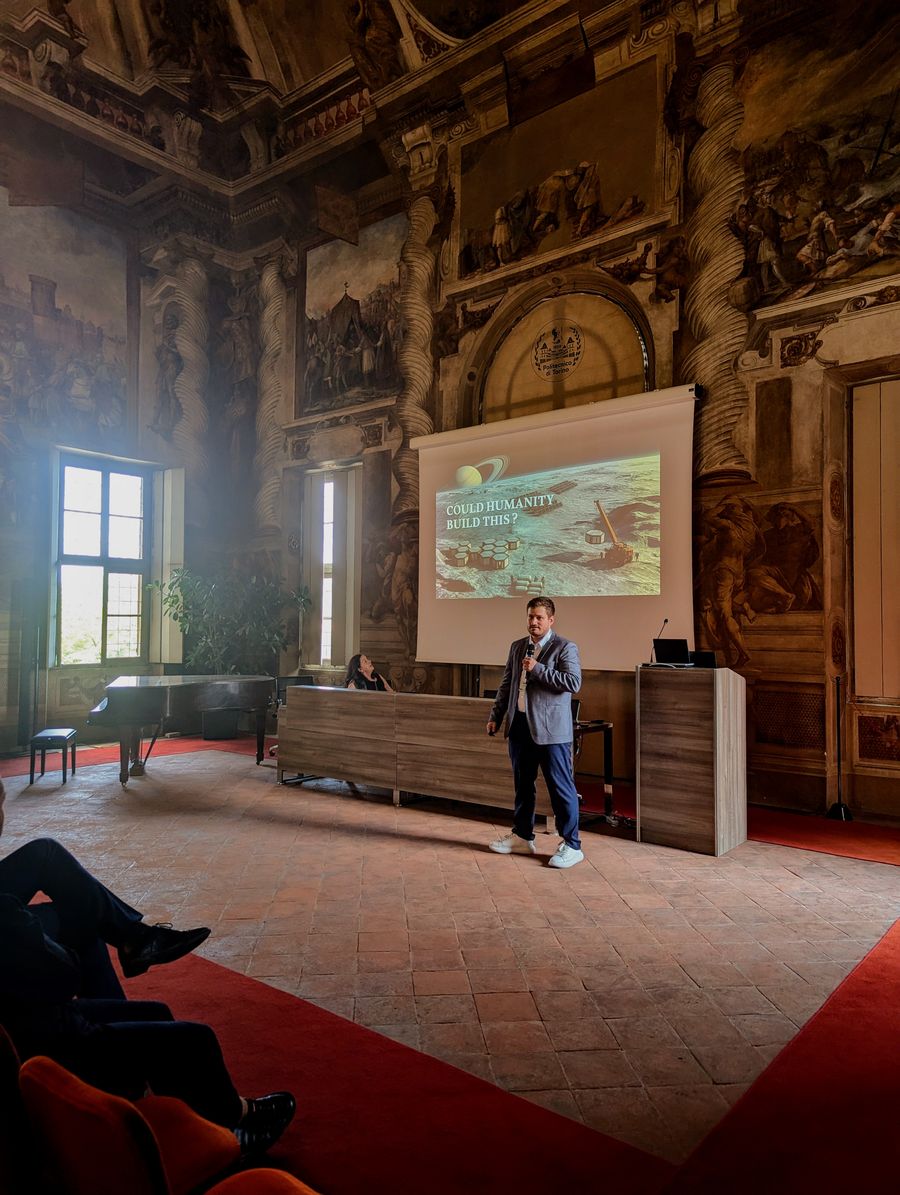
LUMO, in the open.
Presented at ESA and TU München and at Politecnico di Torino, and published openly. A standard only works if it is shared.
Help set the standard.
We are talking to research institutions, research teams in industry, space agencies, commercial lunar providers, students, press and engineers who want to build the interface layer for space. Tell us who you are.
Mission updates
Standard releases, analog campaigns, payload calls. A few times a year, no noise.